How Do Single Core Automotive Cables Support Vehicle Electrical Systems in Daman?
Sanjay Rathod runs a small vehicle body assembly workshop on the outskirts of Daman. Two months ago, he took an order for eight utility vehicles that needed to be wired and ready before the end of the quarter. Instead of waiting to see which cables would work once the vehicles were on the road, he sat down with his supervisor and mapped out every electrical point first. Lighting, sensors, auxiliary equipment, and dashboard controls. That one decision, made before any wiring began, saved him a full week of rework later.
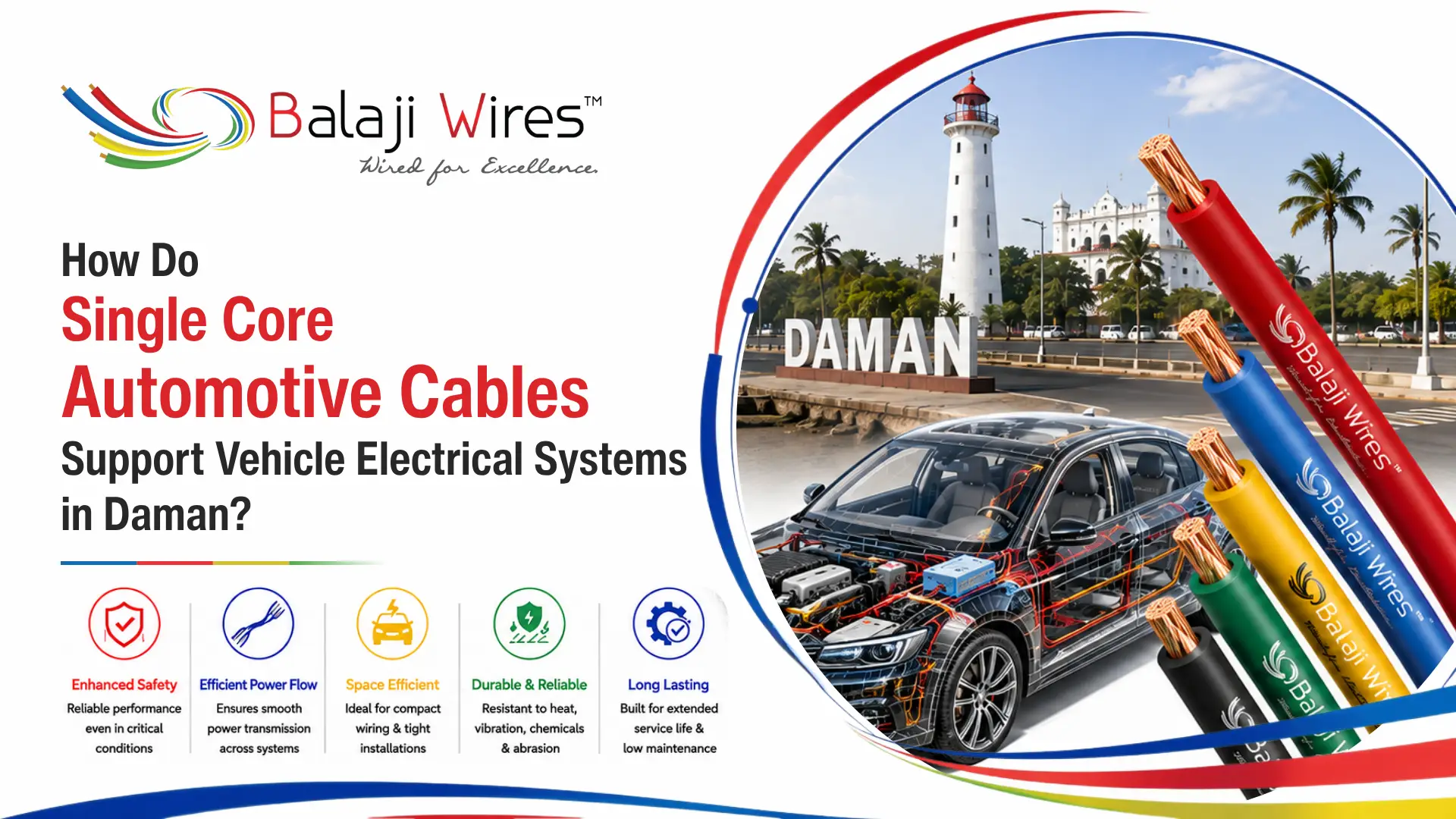
His question was simple. Which cable actually holds up across all these circuits without adding complications down the line? For most of his fleet, the answer came down to single-core automotive cables in Daman. This blog walks through what these cables are, where they fit into a vehicle’s electrical system, and how a workshop like Sanjay’s chooses the right one before the first wire is even cut.
How Do Single Core Automotive Cables Keep a Vehicle’s Wiring Reliable
Daman’s roads see a mix of industrial traffic and logistics movement, and the vehicles built here run for long hours under vibration, heat and constant electrical draw. A vehicle today carries more electrical points than it did a decade ago. Sensors, telematics units, auxiliary lighting and charging points all add to the circuit count, and each one needs a cable that can handle its own load without interfering with the rest.
This is where single core automotive cables in Daman earn their place. Each cable carries one circuit which means a fault in one line does not spread confusion across the whole harness, for Sanjay this mattered more than any single feature on a spec sheet. It meant one wiring mistake would not turn into eight. Thus, it would be easy to find fault if anything happens in the future.
What Is Single Core Automotive Cables?
At their core, these are cables built around a single conductor, usually copper, wrapped in insulation designed for low-voltage vehicle use. Unlike multicore cables, which bundle several conductors together for grouped circuits, a single-core automotive cable that workshops typically use is meant for individual runs where routing flexibility matters more than bundling convenience.
The conductor’s size and insulation thickness change depending on the circuit’s current load and its position in the vehicle. A cable running near the engine bay needs a different insulation rating than one running to a cabin light. This is a detail Sanjay’s team checks against every vehicle’s wiring diagram, not something they assume stays constant across models.
Where Are These Cables Actually Used?
On Sanjay’s assembly line, single core cables show up in more places than most people expect
- Dashboard instrument wiring
- Auxiliary and indicator lighting circuits
- Sensor connections for temperature and pressure monitoring
- Low voltage runs near the battery
- Auxiliary equipment specific to utility vehicle configurations
Each of these points has its own load and its own risk if the wrong cable goes in. That is why automotive cable buyers in Daman rely on circuit-by-circuit selection, not picking one generic solution for the whole vehicle.
What Do These Cables Actually Offer a Workshop Like His?
Once Sanjay’s team settled on their supplier, a few advantages became clear quickly.
- Flexible routing through tight harness bundles without excess bulk
- Easier fault isolation, since one cable serves one circuit
- Better resistance to heat and vibration during long duty cycles
- More efficient use of space in already crowded wiring channels
- Simpler maintenance, since a single faulty run can be replaced without touching neighbouring circuits
These are not dramatic claims, they are the kind of practical everyday differences that show up over months of use not on day one, for vehicle electrical cables used across commercial fleets that kind of quiet reliability tends to matter more than any single standout feature.
How Do These Cables Fit into the Bigger Wiring Picture?
Here’s the part Sanjay found most useful once he understood it. A vehicle’s wiring harness is really a collection of individual decisions, one per circuit, that all must work together without one weak link dragging the rest down.
Single-core vehicle cables at Daman workshops are chosen well and picked specifically so that one circuit’s fault does not cascade into another. If a sensor line has an issue, it stays isolated from that sensor. The lighting circuit keeps running. This is the quiet benefit of correct automotive wiring that Daman vehicles depend on. Fewer surprises and less time spent tracing the fault back through unrelated systems.
How Should You Actually Select the Right Cable?
This is where Sanjay’s approach changed the most.
What to check first? Conductor size, insulation temperature rating, and current-carrying capacity for the specific circuit, not a generic average across the vehicle.
Why does this matter here in Daman? The combination of coastal humidity, industrial heat, and constant vibration on local routes puts more strain on cables than a typical highway run would.
How does his team apply it? Before assembly starts, they match each circuit’s spec sheet to the cable rating, rather than adjusting after the vehicle is already built.
An example from his workshop. On one of the eight vehicles, a lighting circuit needed a higher temperature rating than the standard run due to its position near the engine bay. Catching this at the planning stage meant no rework was needed once the assembly began.
Buyers working with automotive cable manufacturers in Daman often ask suppliers directly about these ratings before placing an order, and that single conversation tends to prevent most downstream issues.
Getting the Wiring Right Before the Vehicle Ever Moves
Single core automotive cables are a small detail in a much bigger vehicle build, but they carry real weight. For Sanjay, choosing the right automotive electrical wires upfront meant his team spent their time assembling vehicles instead of retracing wiring decisions after the fact.
If you are planning a vehicle build or reviewing your current wiring setup, it helps to talk through your circuit requirements before sourcing cables. Reach out to Balaji Cables & Wires to discuss your specifications, request product details, or get a quote for your next batch.
FAQs
What are single core automotive cables?
They are cables built with a single conductor, typically copper, insulated for low voltage circuits in vehicles such as lighting, sensors, and dashboard wiring.
Where are single core automotive cables used?
They are used in dashboard instrument wiring, indicator and auxiliary lighting, sensor connections and low voltage runs near the battery in commercial and utility vehicles.
What are the benefits of single core automotive cables?
Why they help is straightforward. Flexible routing, easier fault isolation per circuit, better resistance to heat and vibration, and simpler maintenance.
Why are single core cables used in vehicles?
Because each cable serves one circuit, a fault in one line stays isolated instead of affecting unrelated systems across the vehicle.
How do I choose the right automotive cable?
Start by checking conductor size, insulation temperature rating and current carrying capacity for the specific circuit, then match that against your local operating conditions.