Why Are Shielded Control Cables Used in Industrial Applications?
A packaging machine builder in Coimbatore started noticing the same complaint from three different customers within the same quarter. Dosing sensors on their filling lines were drifting out of calibration for no clear reason, and the readings would correct themselves the moment the line was stopped and restarted. Nothing showed up in the maintenance logs. No component had failed. When the service team finally compared notes across the three sites they found something they had not expected. All three plants had the machine’s control wiring running in the same tray as the motor power cables and all three had installed the sensors closer to a nearby VFD than the original layout drawing suggested. The wiring itself was working exactly as it was built to work. It just was not built to handle the electrical noise sitting right next to it.
That is usually how the conversation around shielded control cables starts, not as a theoretical upgrade, but as the answer to a pattern that keeps repeating across sites, machines or panels. Understanding why manufacturers reach for shielded wiring in the first place, and where it genuinely earns its place in a panel, helps buyers make that call before a pattern like the one in Coimbatore forces the decision for them.
The Pattern That Keeps Showing Up on Site
Industrial panels have gotten busier over the last few years. A single filling line or conveyor system might now carry a VFD, a couple of contactors, several sensors, and a PLC, all packed into a footprint that used to hold half as much equipment. None of these devices is unusual on its own. VFDs switch current fast, contactors spike when they open and close, and motors generate their own share of electrical noise just by running. The problem is not any one device. It is what happens when low voltage signal wiring shares space with all of them at once.
Control signals do not carry much power to begin with, which is exactly why they are so easy to disturb. A wire carrying a sensor reading or a position signal can pick up enough induced noise from a nearby power cable to send a slightly wrong value to the PLC, and the equipment has no way of knowing the number is off. That is precisely what was happening on those Coimbatore lines. Once you see this pattern once, it becomes easier to recognise it elsewhere.
What Sets a Shielded Control Cable Apart
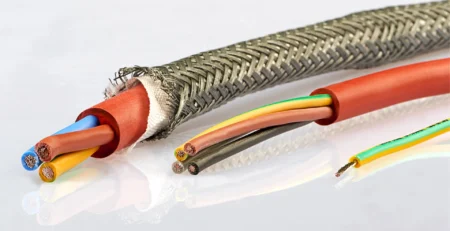
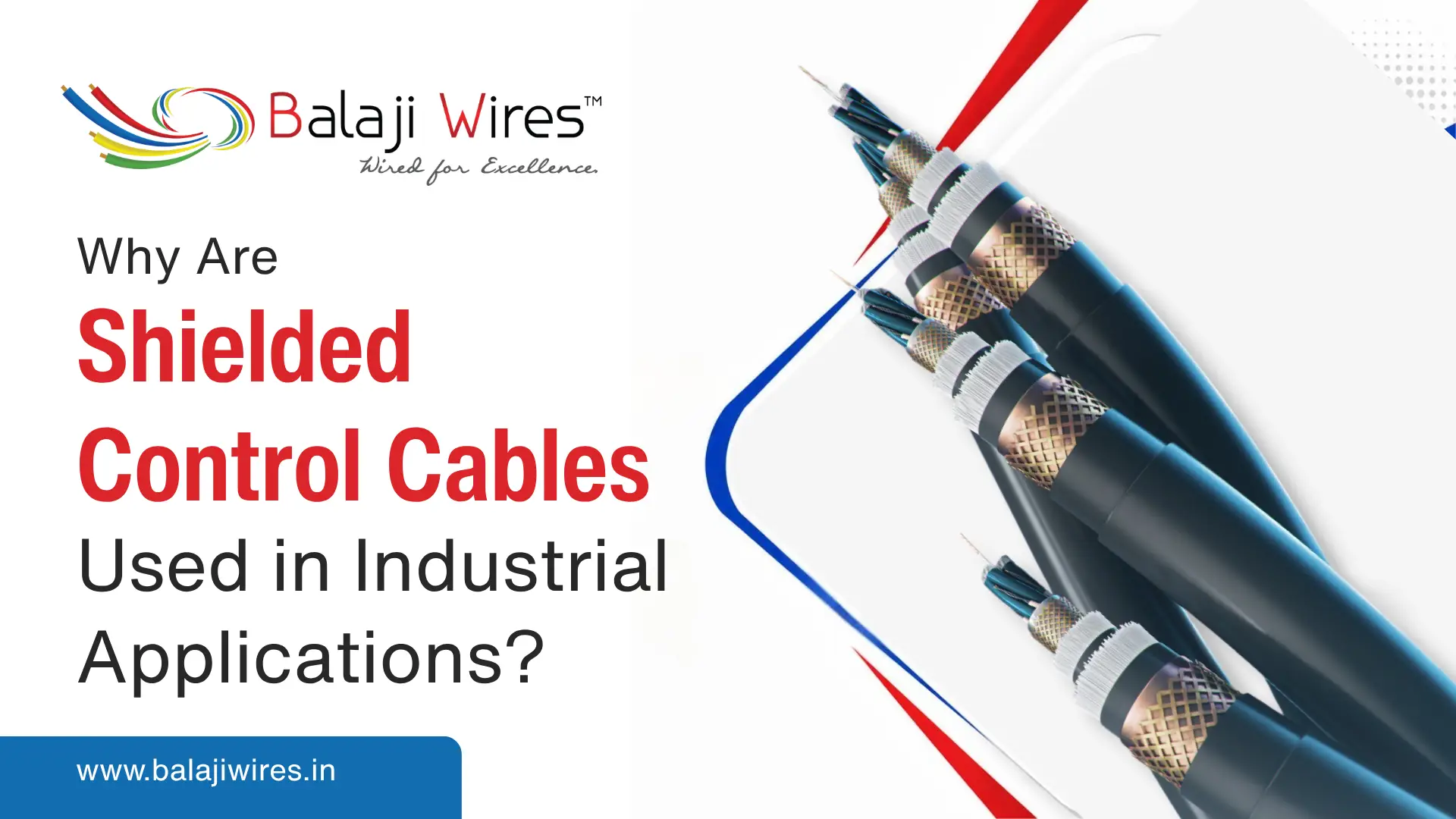
A shielded control cable looks like an ordinary control cable from the outside, but it carries an additional layer wrapped around the conductors, usually a braid, a foil or a combination of both. That layer does not carry the signal itself. Its job is to intercept electrical noise before it reaches the conductors inside and give that noise a path to ground instead.
This is really what separates shielded control wires from standard wiring. A regular control cable has nothing standing between the signal conductor and whatever electrical activity is happening around it. Add a shield, and you have built in a barrier that catches interference at the surface rather than letting it travel straight to the signal path. It sounds like a simple addition, but in a crowded panel, it is often the difference between a sensor that reads correctly and one that does not.
How the Shield Actually Keeps Noise Away From the Signal
The shield works on a fairly straightforward principle. When noise from a nearby cable or device induces a current onto the shield layer, that current gets carried away to ground instead of coupling onto the signal conductors underneath. For this to work, though, the shield needs a solid, low impedance connection to ground. A shield that is not properly grounded is not doing much of anything, no matter how well it was constructed.
Construction quality also plays a role here. Braided shields typically offer somewhere between 70% and 95% physical coverage depending on how tightly the braid is woven, and tighter coverage generally means better protection against high frequency noise, though it also adds cost and reduces flexibility slightly. This is why manufacturers choose braid, foil or a combination based on what the application actually needs, rather than defaulting to whichever option happens to be cheapest. Shielded cables built with proper coverage and a solid ground path are what actually deliver on the promise printed on the datasheet.
What Happens When Wiring Gets Overlooked
When shielding gets skipped or when it is present but poorly grounded, the failures tend to show up in ways that are hard to trace back to the cable itself. Sensor readings drift. PLCs register faults that clear themselves on restart automation lines stop for a few minutes at a time with no obvious cause, and maintenance teams end up checking the sensor, the PLC and the wiring in that order before anyone thinks to look at how the cable is routed.
The cost here is not really the cable it is the hours spent chasing a fault that keeps disappearing before anyone can catch it and the production time lost every time the line stops without warning that is exactly the pattern that pushed the Coimbatore machine builder to review their wiring spec rather than keep responding to complaints one site at a time.
Where These Cables Earn Their Keep on the Plant Floor
Industrial control cables with shielding tend to matter most wherever a low voltage signal has to run anywhere near power equipment. Sensor and instrumentation wiring near VFDs or motor starters is one obvious case. Wiring between a drive and the controller commanding it is another, since both ends of that connection are sensitive to the same noise the drive itself generates. Process plants with dosing pumps, level sensors, and packaging lines running multiple motors in a tight footprint see this constantly, which is exactly the environment the Coimbatore case came out of.
Industrial control wires in food processing, pharmaceutical packaging, and general automation panels all face a version of the same exposure. The equipment changes, but the underlying issue low voltage signals sharing space with high power switching devices, stays the same across nearly every industry that runs automated lines.
What Buyers Actually Notice Once the Wiring Is Right
The benefit of correcting this is rarely dramatic. It shows up as fewer nuisance faults, sensors that hold their calibration instead of drifting and maintenance teams spending less time chasing intermittent problems that never quite repeat the same way twice. For OEMs like the Coimbatore machine builder it also means fewer callback visits and a lot less back and forth with customers trying to describe a fault that only happens sometimes.
Electrical control cables built with the right shielding also tend to hold up better over the life of the machine, since a cable that is not fighting constant interference puts less strain on the connected electronics.
Specifying the Right Cable Without Guesswork
Choosing a shielded cable is not just a matter of ticking a box on a purchase order. Shield type matters, since braided shields handle mechanical flexing better while foil shields give more complete coverage against high frequency noise. Conductor size, insulation rating, and how the shield will be grounded at the panel all need to be decided together, not worked out after the cable has already been installed.
Standards give buyers a useful reference point here. IEC 61000-4-6, the international standard covering conducted RF immunity, applies to equipment across the 150 kHz to 80 MHz range, and it is one of the reasons manufacturers design and test control wiring the way they do. Panels that need to meet this kind of immunity requirement are exactly where a properly specified shielded control cable earns its cost back quickly.
This is also where manufacturing consistency starts to matter more than most buyers expect. A cable that meets its shield coverage specification in the first batch but drifts in later production runs will not perform the same way on every panel it goes into. At Balaji Cables & Wires, this is the kind of detail we build our control cable manufacturing around, since a shielded cable is only as reliable as the consistency behind every metre of it. Buyers looking for dependable industrial cable solutions for automation and process applications are usually looking for exactly this, a cable that behaves the same way on panel fifty as it did on panel one.
Building It Into the Design, Not the Fix List
Electrical noise is not going anywhere as plants continue to pack more automation into the same floor space. The machine builder in Coimbatore did not have a defective product. They had a wiring decision that had not caught up to how crowded their panels had become, and it took three separate customer complaints before the pattern became obvious enough to act on.
Control cables are one of the smaller line items on a panel budget, but they carry a disproportionate share of the risk when they are not matched to the electrical environment around them. Worth asking before your next build, is your wiring spec catching up to how dense your panels have gotten, or is it waiting for the same kind of pattern to show up before it gets a second look? If you are working through a cable spec for an upcoming machine or automation project, we are glad to walk through what fits your application.
FAQs
What are shielded control cables?
They are control cables built with an added conductive layer, usually braid, foil or both, wrapped around the conductors. That layer intercepts electrical noise before it reaches the signal path and carries it away to ground which keeps the actual control signal cleaner.
Why are control cables shielded?
Shielding exists because low voltage control signals are easily disturbed by nearby power equipment such as VFDs, motors, and contactors. Without it, signal wiring running close to these devices can pick up enough noise to cause faults, drift, or false readings.
How do shielded control cables reduce interference?
The shield layer intercepts induced noise from nearby cables or equipment and routes it to ground through a low impedance connection, instead of letting that noise couple onto the signal conductors. The shield only works effectively when it is properly grounded at the termination point.
Where are shielded control cables used?
They are commonly used in automation panels, VFD control loops, sensor and instrumentation wiring and process lines in industries like food processing, pharmaceutical packaging, and general manufacturing, wherever low voltage signals run near high power equipment.
What is the difference between shielded and unshielded control cables?
An unshielded cable has no protective layer between the conductor and the surrounding electrical environment, so it is more exposed to induced noise. A shielded cable adds that protective layer, which gives it a meaningful advantage in panels with VFDs, motors, or other sources of electrical noise nearby.