Copper Wires: Types, Applications and How to Choose the Right Grade
Imran Shaikh opened the bill of materials on his second day as a sourcing engineer at a Chakan company that builds industrial welding machines. Eleven lines covered copper, and each said only “copper wire” and a size. Three suppliers had filled those lines for years and their lots never behaved quite the same. The size was not the problem. What the line left out was. Here is how Imran closed that gap and what it means for anyone buying copper wires for industrial work.
When the Bill of Materials Just Says “Copper Wire”
One lot of welding cable ran warm at the lugs after long shifts, a batch of panel wire felt stiff on the assembly bench and slowed routing. Imran suspected the wire but had no written specification to check it against. Each supplier had sent its own idea of “1.5 sq. mm copper wire” none was wrong on paper; they just were not the same. This difference was clearly visible during their use.
Why the Grade Behind Copper Wires Matters More Now
Copper use in India is climbing, the International Copper Association India reports that demand grew 9.3% in FY2025 to 1,878 kilotonnes and secondary copper made up 42% of it. Recycled copper can perform well, but the mix shows why a buyer of copper wires can no longer assume every coil starts from the same metal.
Regulation points the same way. Under the Copper Products (Quality Control) Order, 2024 copper wire rods for electrical use must conform to IS 12444 and carry BIS certification. So how do you turn this into a better purchase order? Imran started with how the wire is made.
What Are Copper Wires and How Are They Made?
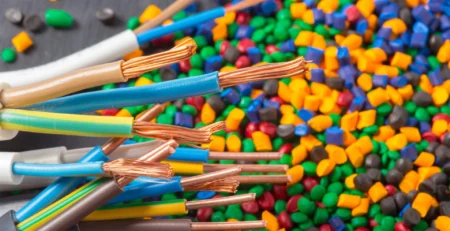
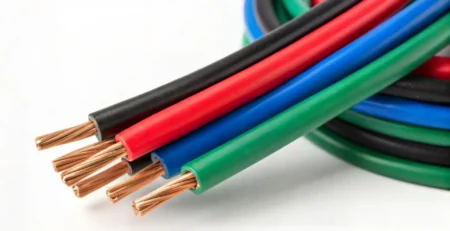
Every copper wire begins as a thick copper rod machines draw it through a series of shrinking dies until it reaches the target diameter. Drawing hardens the metal, so the wire is annealed, a controlled heating step that restores softness and conductivity, fine wires are then stranded, tinned if required, insulated and tested.
Each step shapes the finished electrical copper wire. Imran asked all three copper wire suppliers for their process flow. Two drew, annealed and stranded in their own plants. The third bought finished wire and rewound it, which explained why its lots kept changing.
What Are the Different Types of Copper Wires?
Imran sorted his eleven lines into a few families, and most industrial buyers will find the same groups on their own lists.
- Solid conductors (Class 1) for fixed wiring that never moves
- Stranded conductors (Class 2) for larger fixed runs and earthing
- Flexible conductors (Class 5) for panels and machine wiring
- Extra flexible conductors (Class 6) for welding leads and cables that flex all day
- Tinned copper, which slows oxidation in humid or coastal sites
- Enamelled winding wire for transformers, chokes and motors
- Insulated wires with PVC, XLPE or silicone to suit heat and environment
The stiff panel wire turned out to be Class 2, sent against an order that never named a class. Experienced copper wire manufacturers ask for the class before they quote, because it changes both price and service life.
Where Are Copper Wires Used in Industrial Applications?
Inside one welding machine, Imran counted five jobs for copper. Winding wire formed the transformer; flexible wire served the control panel and Class 6 leads carried current to the torch and earth clamp. Stranded conductors handled earthing and insulated wire linked the fan and sensors.
Across a factory, industrial copper wires run through panels, motors, transformers, vehicle harnesses, appliances, solar installations and earthing systems.
That is why copper wire applications should decide the grade, not the reverse. It also brought Imran to his real task.
How to Choose the Right Copper Wire Grade
Copper wire grades are rarely a single number; Imran’s specification asked four questions for every line.
Start With the Copper Itself
Most electrical wire uses electrolytic tough pitch (ETP) copper, at least 99.90% pure. Purity sets conductivity, measured against the International Annealed Copper Standard (IACS), where 100% equals 58 MS/m at 20°C. ETP covered all of Imran’s lines, but writing it down closed one more door to substitution.
Match the Conductor Class to How Much the Wire Moves
Every bend flexes the strands, and thicker strands crack sooner, use Class 5 or 6 for anything that moves and Class 1 or 2 for fixed runs, Imran set Class 6 for welding leads and Class 5 for panel wiring.
Decide Between Bare and Tinned Strands
Tinning resists oxidation but raises resistance slightly, under IEC 60228 a 1.5 sq mm Class 5 conductor may reach 13.3 ohm/km in plain copper and 13.7 ohm/km tinned, Imran chose tinned only for machines going to coastal customers.
Size the Insulation for the Real Temperature
Copper usually outlasts its insulation. Imran measured the area near the transformer during a long weld cycle, found it hotter than the drawing suggested and moved those lines to a higher rated insulation.
What Factors Affect Copper Wire Conductivity and Durability?
A wire’s starting conductivity comes from the purity of its copper and how well it was annealed. Heat then pulls that figure down, by about 0.393% for every degree Celsius. The real cross section counts as well. If a wire sold as “1.5 sq mm” has fewer or thinner strands than it should, it carries more resistance, runs hotter and loses more voltage. Over time, oxidation, repeated flexing and ageing insulation decide how long it stays in service.
The good news is that one simple test exposes most of these problems. Measure the resistance over a known length of wire and compare the result with the limit for its size and class. Imran’s team did exactly that with the welding cable that had been running warm, and the reading came back above the limit.
How to Select a Reliable Copper Wire Manufacturer in India?
With a written specification, choosing a supplier became a question of evidence. Imran looked for:
- Drawing, annealing and stranding done in house
- A BIS certified copper rod source
- Lot wise test reports that match the reel label
- Samples made against his specification
- Steady results across several lots
Plenty of copper wire manufacturers in India can meet a specification once. Fewer hold it for a full year of orders.
Imran moved from three sources to one primary maker and one approved backup. Good copper wire manufacturers welcome that clarity because it removes guesswork on both sides.
Five Buying Mistakes That Turn Good Copper Into a Costly Wire
- Ordering by size alone, which leaves the supplier to guess the class, grade and insulation.
- Ignoring the conductor class, so fixed wiring ends up in a moving part.
- Assuming tinned is always better, when it adds a little resistance and cost.
- Comparing price per kg on its own. Ask copper wire suppliers for measured resistance with the rate.
- Skipping the incoming check, which takes minutes and can save a service visit.
How One Page of Specifications Ended Three Supplier Debates
Imran’s specification now fits on one page and goes out with every enquiry. Supplier debates now end at the first test report. Copper wires perform only as well as the specification behind them.
At Balaji Wires and Cables, we manufacture copper wires and cables from our Navi Mumbai base and our Palsana facility. Planning a cleanup of your own wire list? Share your bill of materials with our team, and we will help you match each line to a suitable grade, with test data alongside the quote.
Frequently Asked Questions About Copper Wires
What are the different types of copper wires?
Common copper wires fall into a few families. Solid (Class 1) and stranded (Class 2) conductors suit fixed wiring, while flexible (Class 5) and extra flexible (Class 6) conductors suit panels, machines and welding leads. Each can be bare or tinned, and enamelled or insulated wires cover windings and harsher sites. The type decides how well the wire copes with movement, heat and moisture so note where each wire runs and how often it moves before choosing.
Which copper wire grade is best for industrial applications?
ETP copper suits most industrial jobs when you pair it with the right conductor class and insulation rating. Purity sets conductivity, the class sets flexibility and the insulation sets the temperature limit. Get one of these wrong and the wire runs hot, cracks or ages early, define all three against your real load, movement and measured temperature then write them into the purchase specification.
Why is copper widely used in electrical wiring?
Copper carries current with little loss, keeps its strength and draws easily into fine strands for flexible wire, it is so dependable that the International Annealed Copper Standard uses it as the benchmark for other conductors. That mix keeps heat; voltage drop and wasted energy low over years of service. To get those benefits, specify the grade, class and size and check resistance when each lot arrives.
How do I choose a reliable copper wire supplier?
Look for copper wire suppliers who draw, anneal and strand in house, share lot wise test reports that match the reel label and accept sample trials against your written specification. One good delivery proves little because consistency across lots decides whether your equipment behaves the same month after month. Ask for reports from several recent lots, test a sample yourself and start with a trial order before signing a rate contract.