
Why Are Multicore Automotive Cables Used in Modern Vehicles in Palsana?
Vijay runs a small transport fleet out of the Udhna Palsana corridor, mostly trucks that move goods between Surat and the neighbouring industrial belts. Last winter, one of his trucks started acting up. The dashboard lights would flicker, the reverse sensor would drop out randomly, and once the fuel gauge just stopped responding for half a day. His mechanic spent two days chasing the fault before he found it. Inside the engine bay, a bundle of loose wires had rubbed against each other and against the frame for months, wearing through the insulation bit by bit until they finally shorted.
That truck was off the road for four days. For a small fleet operator four days of downtime is real money lost. When Vijay asked his mechanic why this kept happening, the answer was simple. The vehicle had too many separate wires crammed into too little space, with nothing holding them together properly. That is exactly the kind of problem multicore automotive cables are built to solve, and it is worth understanding why manufacturers have shifted toward them across nearly every modern vehicle on the road today.
The Wiring Problem Every Palsana Fleet Owner Eventually Faces
Vijay’s story is not unusual. Any vehicle whether it is a truck, tractor, or passenger car, carries dozens of individual electrical circuits. Lights, sensors, the horn, the ECU, the infotainment unit all of them need their own wire run from one end of the vehicle to the other. When these wires are bundled loosely, without a shared protective covering, they rub against metal edges, against each other, and against engine heat. Over time the insulation wears thin and faults creep in quietly, the kind that do not show up until a component fails on the road.
This is the everyday reality for workshops and fleet owners across the Palsana industrial belt where vehicles run long hours in dusty, high vibration conditions. The question most owners eventually ask is simple. Why does this keep happening and is there a wiring approach that holds up better?
What Is a Multicore Automotive Cable Really
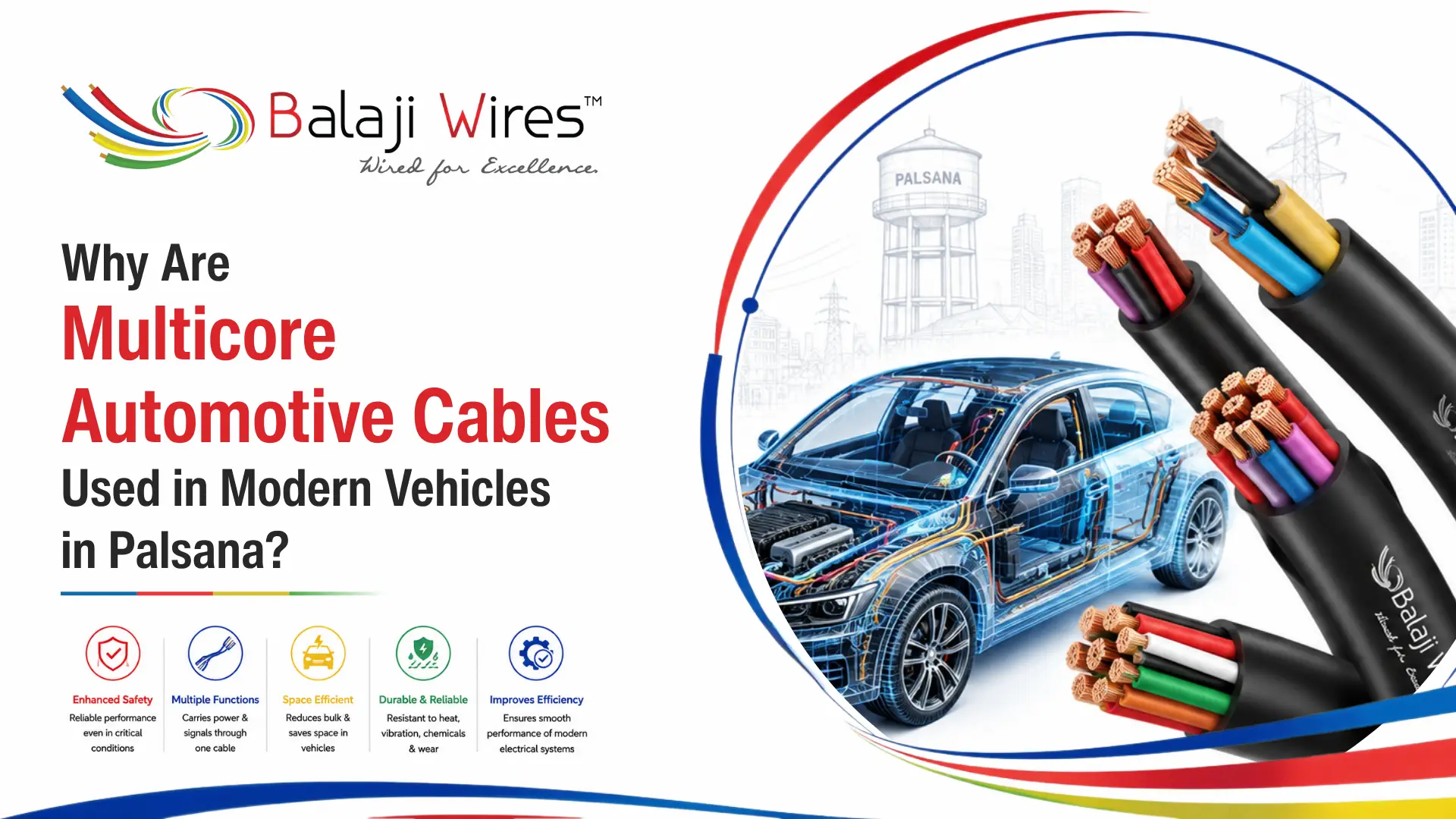
A multicore automotive cable is exactly what it sounds like. Instead of running several single core wires separately, multiple insulated conductors are bundled together under one common outer sheath. Each core still carries its own signal or power line but they travel as a single protected unit rather than loose strands rubbing against everything around them.
This is different from a standard automotive wire, which typically carries one conductor on its own. A multicore automotive cable Palsana manufacturers supply today is built specifically to handle the kind of crowded, high vibration environment you find inside a modern engine bay or dashboard housing. Interestingly, the international standard governing single-core automotive cables, ISO 6722, is written broadly enough that it also applies to the individual cores used inside multicore assemblies, which tells you how closely the two are linked technically.
Where These Cables Actually Sit Inside a Vehicle
Multicore cables are not confined to one part of the vehicle. You will find multicore vehicle cables that Palsana workshops handle in several locations.
- Dashboard and instrument cluster wiring where dozens of thin signal wires need to run together without interference
- Engine bay sensor harnesses, which face constant heat and vibration
- Lighting and indicator circuits especially in commercial vehicles with multiple lamp clusters
- Infotainment and connectivity systems in passenger cars
- Battery and control wiring in electric and hybrid vehicles a segment that is growing fast
That last point matters more each year. Vehicle electrical cables now carry far more data and power than they did a decade ago simply because vehicles carry more electronics. Every new sensor or feature adds another circuit and multicore construction is what keeps that growth manageable instead of turning into a tangle.
Why Multicore Design Fixes What Loose Wiring Cannot
Coming back to Vijay’s truck the fault happened because loose wires had nowhere to sit safely a properly built multicore harness addresses that directly.
First, it saves space. A single jacketed cable takes up far less room than five or six loose wires running in parallel, which matters in a dashboard or engine bay where space is already tight. Second, it reduces the chance of chafing and short circuits, since the conductors are held together and protected by a shared outer layer instead of moving independently against metal edges. Third, it makes fault tracing easier for technicians, because a labelled multicore bundle is simpler to follow than a mess of individual wires. And finally, the quality automotive wiring Palsana buyers look for is built to resist the heat, vibration and moisture that vehicles face on Gujarat’s roads, which is a real consideration given how much time commercial vehicles here spend on the move.
Would Vijay’s truck have avoided that four day breakdown with a properly built multicore harness in the first place? Very likely yes, since the failure point was precisely the kind of loose wire chafing that multicore construction is designed to prevent.
How This Changes the Way Vehicles Get Wired
Zooming out a bit, this shift is not just about avoiding failures. It has changed how vehicles get designed and assembled in the first place. Fewer individual wire runs mean cleaner harness architecture for vehicle assemblers which speeds up production and reduces assembly errors. It also supports the growing complexity of modern vehicles, since electric vehicle adoption in India has picked up sharply. According to SIAM data, EV registrations in the country rose to 1.97 million units in FY 2024-25, up from 1.68 million units the year before. Every one of those vehicles depends on wiring that can carry higher voltage battery and control circuits reliably which is exactly the kind of demand multicore cable design is built to meet.
What to Ask Before You Buy Automotive Cable
If you are sourcing automotive cable from Palsana suppliers, a few questions are worth asking before you commit to any batch.
- Is the conductor stranding suited to the flex and vibration the cable will face
- Does the insulation material handle underhood heat without degrading over time?
- Does the cable meet recognised automotive standards rather than a generic wire specification?
- Is the core count and gauge actually matched to your application, not just whatever is in stock
- Does the manufacturer have a track record supplying automotive cable manufacturers Palsana and nearby industrial buyers rely on
Skipping these questions is usually how buyers end up back at square one, dealing with the same wiring failures a few months down the line.
Getting the Right Cable Without the Guesswork
Palsana’s position along the Udhna industrial corridor puts it close to Surat’s transport and manufacturing base, which is exactly why local sourcing matters here. A cable made and tested close to where it will actually be used tends to arrive faster and gets quality issues resolved quicker than one shipped in from far away. That is where the automotive wiring solutions Palsana fleets and workshops need should come from, manufacturing that understands local operating conditions rather than a one size fits all approach.
Vijay eventually switched his fleet’s wiring supplier and has not had a repeat of that dashboard fault since. It was not a dramatic fix, just a more sensible cable for the job.
If your vehicles or fleet are dealing with wiring issues that keep coming back, it is worth talking through your actual requirement rather than guessing at a fix. Reach out to Balaji Cables and Wires with your specifications, and we can help you find the right multicore cable for your application.
FAQs
What are multicore automotive cables?
They are cables that bundle multiple insulated conductors under a single protective outer sheath instead of running each wire separately.
Why are multicore cables preferred in modern vehicles?
They save space, reduce chafing and short circuit risk, and hold up better under the heat and vibration a vehicle experiences during regular use.
What are the benefits of using multicore automotive cables?
Cleaner harness layout, easier fault tracing for technicians, and better protection for the wiring inside crowded spaces like dashboards and engine bays.
How do multicore cables handle the demands of electric vehicles?
They allow higher voltage battery and control circuits to run safely within a single protected bundle, which suits the added electrical load EVs carry compared to conventional vehicles.
How do I choose the right automotive cable for my vehicle or fleet?
Match the conductor stranding, insulation, and core count to your actual application confirm the cable meets recognised automotive standards, and buy from a manufacturer with real experience supplying vehicles operating in your region.
