How High Temperature Cables Manufacturing Ensures Safety and Reliable Performance in Industrial Applications

Industrial environments do not operate in ideal conditions. Equipment runs continuously, temperatures rise and electrical systems carry heavy loads for long hours. In such settings, a standard cable is often the weakest link.
When insulation softens or cracks under heat, operations slow down. Sometimes they stop completely. That is why high-temperature cable manufacturing plays a critical role in industrial safety and performance.
If your facility operates near furnaces, engines, turbines, or high load machinery, the question becomes simple. Are your cables built to withstand the heat they face every day?
The Real Risk of Heat in Industrial Operations
Walk through a steel plant, automotive assembly line or power generation unit. Heat is constant. It is not an occasional exposure. It is continuous stress.
Electrical systems in these environments face two challenges. External heat from machinery and internal heat generated by current flow. When insulation is not designed for elevated temperatures, degradation begins quietly. Small cracks appear. Flexibility reduces. Resistance increases.
According to the National Fire Protection Association, electrical distribution and lighting equipment are among the leading causes of industrial fires in manufacturing properties. Heat related insulation failure is often a contributing factor. That data alone should make any industrial decision maker pause.
The risk is not only fire. It is downtime. It is equipment damage. It is a loss of production. A single cable failure in a critical line can halt an entire process.
This is where industrial high-temperature cables move from being a technical specification to becoming a safety decision.
And as industries expand, this concern becomes even more relevant.
Why Temperature Rated Cable Engineering Matters Today
Global electricity demand continues to rise. The International Energy Agency reports steady growth driven by electrification, industrial expansion, and the rapid adoption of electric vehicles. As more systems depend on electricity, load requirements increase. So does heat generation.
At the same time, automation is expanding. Machines operate faster and longer. EV manufacturing facilities, renewable energy plants, heavy machinery lines, and battery production units all function under elevated thermal conditions.
Now consider workplace safety. The Occupational Safety and Health Administration consistently highlights electrical hazards as a major source of workplace injuries. Heat stressed wiring adds to that risk.
In this environment, using standard cables rated for lower temperatures is not a cost saving measure. It is a vulnerability.
This is why heat resistant electrical cables are no longer optional in many sectors. They are a necessary part of compliance, insurance approval, and operational continuity.
But what truly ensures their reliability? The answer lies in how they are manufactured.
Inside the Manufacturing Process That Protects Performance
A cable that performs under high heat is not built by chance. Every layer, every material, and every test matters. Structured high-temperature cable manufacturing follows a disciplined approach from conductor selection to final inspection.
High Purity Conductors That Control Heat Build Up
The foundation of any cable is its conductor. In high temperature applications, conductor purity directly influences resistance levels. Lower resistance means reduced internal heat generation.
We use premium grade electrolytic copper with controlled drawing processes to maintain uniform diameter and conductivity. This consistency ensures stable performance even when current loads fluctuate.
Think about an automotive engine compartment. Temperatures rise continuously. If the conductor itself adds unnecessary resistance, insulation stress increases. That is how failures begin.
High purity conductors form the first layer of protection.
Advanced Insulation That Withstands Thermal Stress
Insulation is where most temperature related failures occur. Standard PVC softens at lower temperatures. In contrast, industrial high temperature cables use materials such as silicone rubber, cross-linked polyethene, PTFE, fibreglass, or mica-based systems, depending on application needs.
These materials are chosen for one reason. They retain mechanical and electrical properties even when exposed to prolonged heat.
Here, manufacturing accuracy is important. Uniform insulation thickness is ensured by controlled extrusion. Tests for thermal ageing mimic prolonged exposure. Tests of dielectric strength confirm the stability of insulation integrity.
These material selections affect whether the system operates reliably or degrades too quickly in power plants, where cable temperatures can reach 150°C or more.
Protective Sheathing and Shielding That Adds Durability
Heat is not always direct. It may radiate from nearby machinery. It may combine with mechanical stress, oil exposure, or vibration.
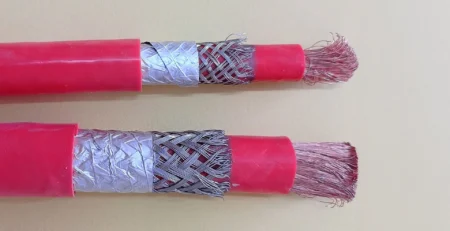
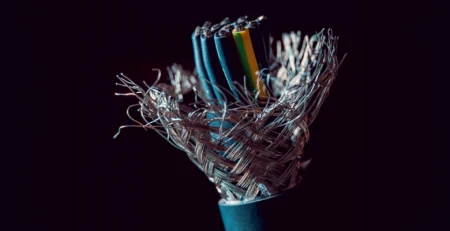
This is where braiding, armouring, and flame retardant outer jackets add another layer of safety. Braided copper shielding reduces electromagnetic interference. Steel wire armouring increases mechanical strength. Specialised sheathing compounds resist both flame and abrasion.
For example, in furnace areas or heavy equipment lines, heat resistant electrical cables must withstand both high ambient temperature and physical strain. Protective layers ensure that outer damage does not compromise inner insulation.
Rigorous Testing Before Deployment
The dependability of a cable cannot be presumed. It needs to be confirmed.
Cables are subjected to high temperatures for predetermined periods of time during thermal endurance tests. Tests for flame retardancy evaluate how fire behaves. Insulation continuity is checked by spark testing. Conductor performance is verified by resistance measurements.
Certification under relevant IEC and IS standards further validates compliance. For industries that export machinery or components, this compliance becomes critical for global acceptance.
Structured high-temperature cable manufacturing integrates testing at every stage, not only at the end. In process quality control prevents defects from moving forward.
When each layer is designed and validated carefully, the result is predictable performance.
Best Practices When Selecting Industrial High Temperature Cables
Even the most advanced manufacturing standards cannot prevent issues caused by incorrect cable selection. As a buyer or procurement manager, a structured evaluation is essential.
Here are the key points to consider.
- Align temperature ratings with actual operating conditions.
Check both continuous operating temperature and peak exposure levels. Do not rely only on nominal ratings mentioned in catalogues. Real world heat conditions often fluctuate. - Verify certifications and compliance documents.
Ensure the cable meets recognised national and international standards. Proper certification confirms that performance has been tested under defined conditions. - Evaluate environmental exposure.
Consider whether the cable will be exposed to oil, chemicals, moisture, dust, or vibration. Insulation and outer sheathing must be compatible with these factors. - Assess flexibility requirements.
In applications involving robotics or moving machinery, cables must withstand repeated bending. Adequate flexibility prevents cracking and premature insulation failure. - Avoid under rating to reduce initial costs.
Choosing a lower specification cable may reduce upfront expense, but it increases the risk of replacement, downtime, and safety concerns over time.
Before finalising your decision, reflect on this. Is the cable engineered for your actual operating environment, or does it simply meet catalogue specifications?
Selecting properly designed industrial high-temperature cables delivers more than technical compliance. It provides long term reliability and operational confidence.
Building Long Term Reliability Through Smarter Cable Choices
High-heat environments demand thoughtful engineering. A cable that performs in such conditions is the result of disciplined material selection, precision manufacturing, and rigorous testing.
Through structured high-temperature cable manufacturing, industries reduce downtime, improve safety, and maintain consistent electrical performance. As electricity demand rises and industrial systems grow more complex, dependable cable solutions become a strategic asset.
If your facility operates under elevated temperatures, now is the right time to review your current wiring infrastructure. We at Balaji Cables and Wires design and supply heat resistant electrical cables built for demanding industrial applications.
Connect with us to evaluate your requirements. Let us help you choose cable solutions that protect your systems and support reliable performance for years to come.
Frequently Asked Questions
What temperature range can high-temperature cables handle?
Most industrial high-temperature cables are rated between 150 degrees Celsius and 250 degrees Celsius, depending on insulation material and design.
How are heat resistant electrical cables different from standard cables?
They use advanced insulation materials and protective sheathing that maintain electrical and mechanical stability under sustained thermal stress.
Where are these cables commonly used?
Applications include power plants, automotive manufacturing, steel facilities, renewable energy systems, heavy machinery and battery production units.
Can incorrect cable selection increase fire risk?
Yes. Using cables below the required temperature ratings can cause insulation breakdown, short circuits and potential fire hazards.
Why does manufacturing quality matter so much?
Small variations in conductor purity or insulation thickness can significantly reduce lifespan. Structured high-temperature cable manufacturing ensures consistent performance and safety.