What Types of Industrial Cables Are Suitable for Daman’s Manufacturing Businesses?
Farida Merchant had a blank cable schedule and a new production hall to fill. As plant engineer at a plastic packaging unit in Bhimpore, Daman, she was adding six injection moulding machines, two chillers, a conveyor line and an air compressor. The electrical contractor needed a cable list by Friday. Her first question was simple. Which cable belongs where?
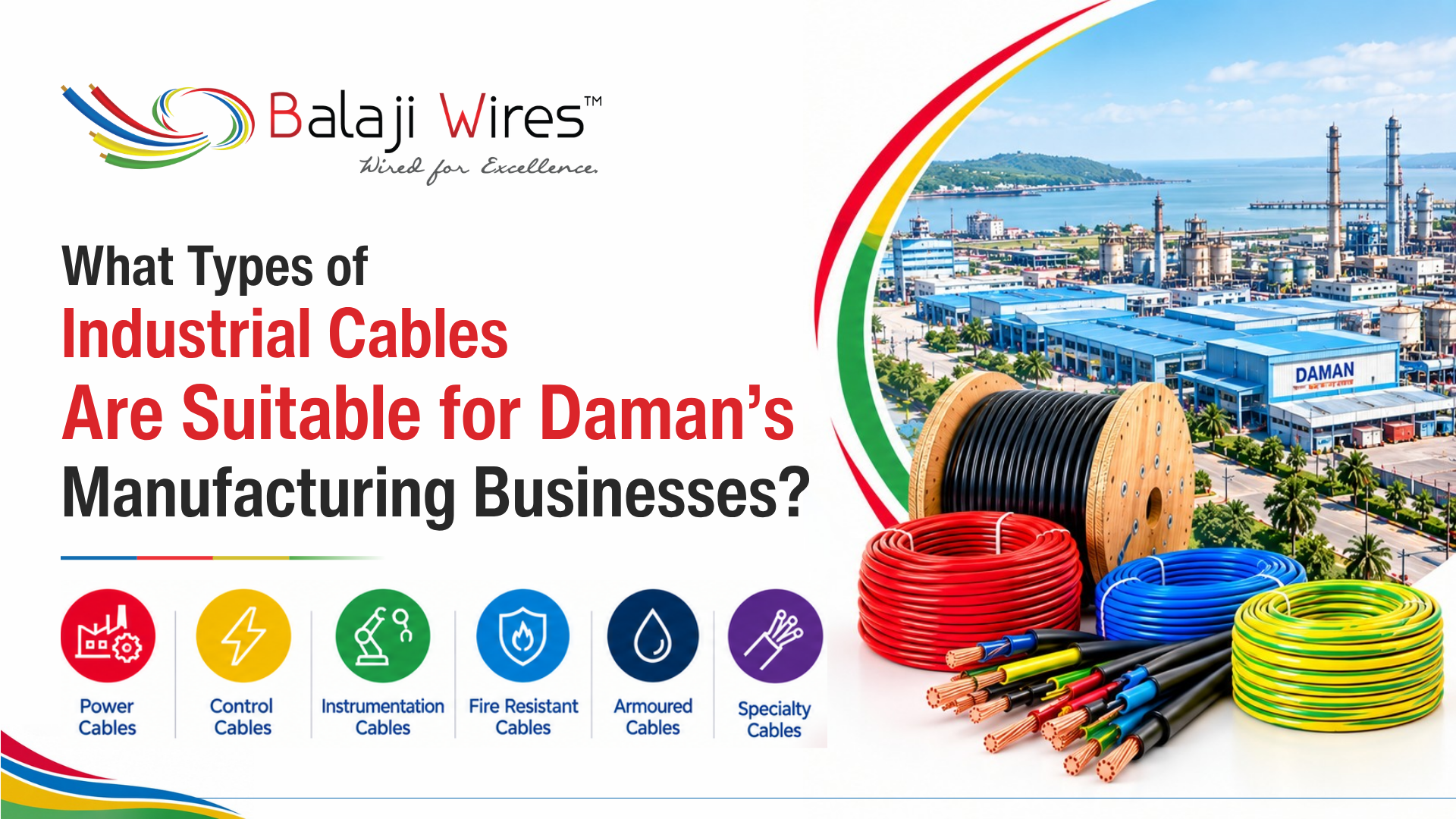
That question sits behind every expansion. This guide follows Farida’s schedule zone by zone and explains which industrial cables in Daman suit which jobs, and how to choose a manufacturer to supply them.
Why Do Manufacturing Businesses in Daman Need Industrial Cables?
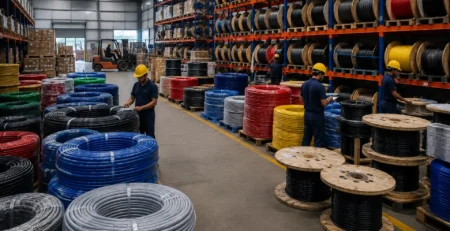
Daman’s industrial areas host plastics, packaging, engineering and processing units that run machines for long shifts. Household wiring is not built for that. Industrial plants need cables that carry motor loads continuously, survive vibration and heat, and keep control signals clean.
Farida’s hall would run three shifts a day. A cable chosen only on price could overheat at a moulding machine or pick up noise near a drive. Picking the right industrial cables Daman plants use from the start avoids rework once the machines are bolted down.
What Are the Main Types of Industrial Cables?
Most factory cable schedules draw from a handful of families:
- Power cables that carry supply from panels to machines
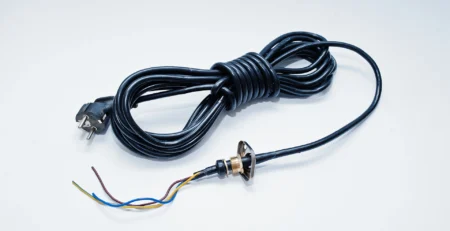
- Flexible cables for moving parts and machine wiring
- Control cables for signals, sensors and interlocks
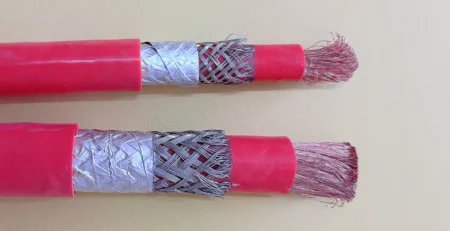
- Shielded cables where electrical noise is a concern
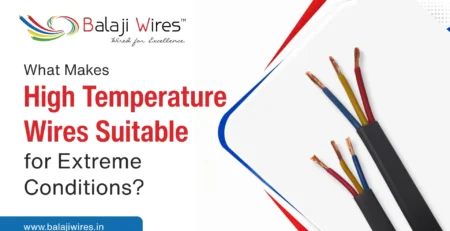
- High temperature wires for heaters, ovens and hot zones
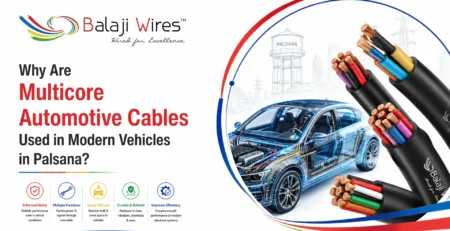
- Automotive and battery cables for vehicles, forklifts and backup systems
Farida grouped her hall into zones and matched each to one family, which turned a long equipment list into a short schedule.
Which Cables Are Suitable for Industrial Machinery?
Machines draw high starting currents and run for hours, so the supply cable must handle continuous load without excessive voltage drop. PVC-insulated power cables to IS 1554 (Part 1) or XLPE-insulated cables to IS 7098 (Part 1) are common choices up to 1100 V. XLPE tolerates higher conductor temperatures, which helps in warm plant rooms.
Inside the machine, flexibility matters more. Fine stranded copper conductors bend without cracking, which suits panels and moving assemblies. For Farida’s moulding machines and compressor, she specified armoured power cable from the main panel and flexible copper wires for internal panel wiring. Both are standard manufacturing cables that Daman units buy in volume.
When Should Businesses Use Control Cables?
Control cables carry low-power signals between sensors, switches, PLCs, and drives. They do not carry heavy currents, but their signals must arrive accurately.
Use multicore control cables wherever several signals run along the same route, such as from a machine’s sensors back to its PLC. Where cables run near variable frequency drives or large motors, choose shielded control cables. The shield reduces electromagnetic interference, so the PLC reads the true signal. Farida’s conveyor used drives at each section, so she specified shielded control cable along the full run. Reliable industrial wires Daman plants use for control work should come with clear core identification to speed up termination.
Which Cables Are Suitable for High-Temperature Applications?
Injection moulding creates heat. Barrel heaters, hot runners and mould temperature controllers sit close to wiring that standard PVC insulation would soften or age.
For these zones, high-temperature wires with silicone rubber or similar insulation stay flexible and keep their insulation properties under sustained heat. Ratings depend on construction, so always check the manufacturer’s rated temperature against the actual surface temperature in your machine. Farida measured surface temperatures near her heater bands before finalising the schedule, then chose wires rated with a comfortable margin above them.
How Do Automotive and Multicore Cables Support Manufacturing?
Automotive cables appear in factories more often than buyers expect. Forklifts, battery-operated material handling equipment, gensets and backup systems all use automotive-style wires and battery cables that handle vibration, oil and high current. Automotive wires built to ISO 6722 offer defined temperature classes and abrasion performance.
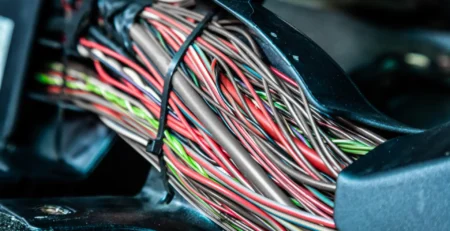
Multicore cables simplify installation. One sheathed cable with several cores replaces many single wires, which reduces cable tray clutter and termination time. Farida used battery cables for her forklift charging bay and multicore cables for the chillers’ control connections. Both count among the electrical cables Daman factories need beyond their main production machines.
What Factors Should Daman Businesses Consider When Selecting Cables?
Once the cable families are clear, size and specify each run carefully:
- Current rating for the actual load and installation method
- Voltage drop over the run length
- Operating and ambient temperature, including nearby heat sources
- Flexibility needs for moving parts
- Shielding near drives and motors
- Exposure to oil, moisture or coastal humidity
- Applicable standard and test documentation
Coastal humidity deserved a line of its own in Farida’s schedule. Daman sits on the Arabian Sea, so she specified suitable sheathing for cable runs near the loading bay doors.
How Can Businesses Choose the Right Industrial Cable Manufacturer?
With the schedule ready, Farida needed one dependable source. An industrial cable manufacturer Daman buyers can rely on should make most of the required types in-house, provide batch test reports, and advise on sizing and construction instead of only quoting prices.
She also looked for an industrial wire and cable supplier Daman plants could reach quickly for urgent top-ups during commissioning. A supplier covering power, control, shielded, high-temperature, and battery cables meant one approval process and one consolidated delivery plan.
A Cable Schedule That Matched the Hall
Farida submitted her schedule on Thursday, a day early. Each zone had a cable family, a standard reference and a temperature or shielding note where it mattered. Choosing industrial cables in Daman zone by zone gave her contractor a clear brief and gave her plant wiring that suits each machine.
At Balaji Wires and Cables, we manufacture shielded control cables, flexible copper wires, high-temperature wires, automotive and battery cables for manufacturing businesses in Daman and across western India. Planning an expansion or a new line? Share your equipment list and cable schedule with our team, and we will help you work out industrial cable solutions that Daman plants can install with confidence.
https://balajiwires.in | info@balajiwires.in | +91 8976778884
Frequently Asked Questions
What types of industrial cables are suitable for manufacturing businesses in Daman?
Manufacturing units typically need power cables, flexible wires, control and shielded cables, high-temperature wires, and automotive and battery cables, each matched to a specific machine zone.
Which cables are commonly used for industrial machinery?
Machinery commonly uses PVC- or XLPE-insulated power cables for supply, and flexible fine stranded copper wires for internal panel and machine wiring.
What are control cables used for?
Control cables carry signals between sensors, switches, PLCs and drives. Shielded versions protect those signals from interference near motors and variable frequency drives.
Which industrial cables can handle high-temperature applications?
High-temperature wires with silicone rubber or similar insulation handle heat near heaters, hot runners and ovens. Always check the rated temperature against actual surface temperatures.
How should Daman businesses choose industrial cables?
Consider load current, voltage drop, temperature, flexibility, shielding, humidity and applicable standards when selecting industrial cables for Daman unit installations. Then source from a manufacturer that provides test reports and technical advice.